


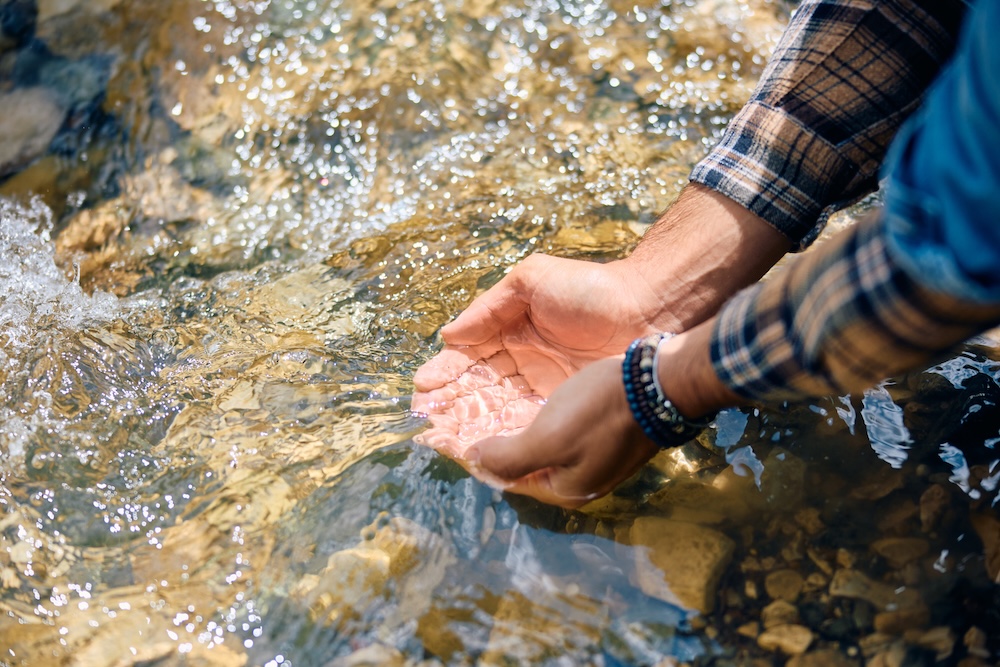
The Romantic Road, Germany’s only certified quality vacation route, offers a wide variety of water-themed attractions—and not just in the height of summer. When temperatures reach unprecedented highs—as they have in recent weeks and are likely to continue doing—shade and cooling water in the form of swimming pools, natural outdoor pools, and healing springs are in high demand. Along the Romantic Road, you’ll also find a wide variety of water attractions that guarantee relaxation, water fun, and a genuine vacation feeling—even in the heat. All of this is set against a romantic backdrop that’s unique in the world.
The nature and landscapes along the Romantic Road are diverse and varied. Above all, however, they are shaped by the rivers that follow the route. In Würzburg, it is the Main River and the surrounding vineyards that define the landscape. The Romantic Road then follows the Tauber River, reaching the Wörnitz River, which flows into the Danube at Donauwörth. From Augsburg onward, it is the Lech that accompanies the scenic route into the Alpine foothills. And in Füssen, it is the Allgäu Alps and their lakes—such as Lake Forggensee and Lake Hopfensee—that provide a magnificent backdrop for a fitting conclusion to the journey.
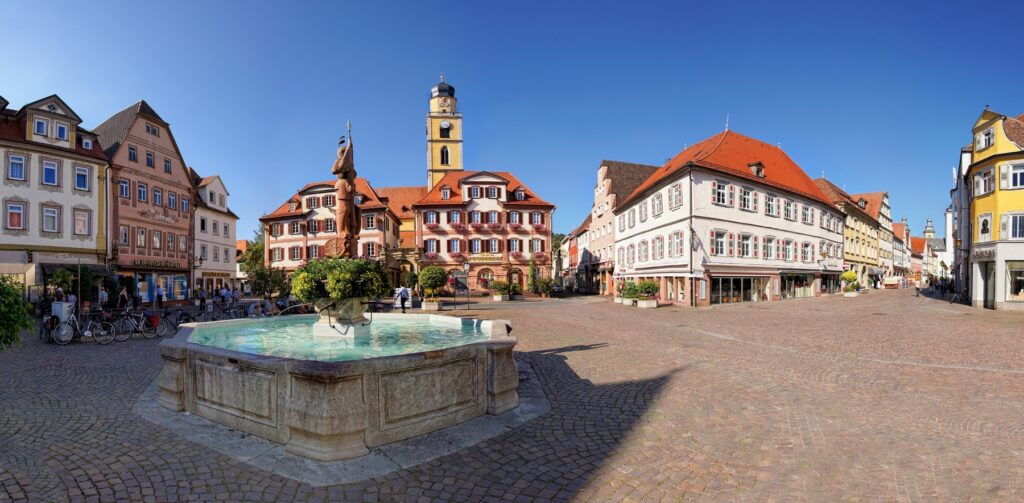
In Bad Mergentheim, for example, everything in 2026 will revolve around water. The town will celebrate 200 years of healing springs in Bad Mergentheim with a glamorous ball and a grand theatrical production chronicling the history of the spas. With a specially created play and a grand anniversary ball, Bad Mergentheim will mark two significant anniversaries in its history in 2026: The first healing spring was discovered 200 years ago, and the town has officially held the title “Bad” for 100 years. The anniversary year brings to life the town’s evolution from a small town on the Tauber to an internationally renowned spa and health destination. The town boasts four healing springs. Together with the expansive spa park, health services, and rehabilitation facilities, they form the foundation of a key health asset for the region. The poet Eduard Mörike, who lived in Bad Mergentheim for several years, described the landscape surrounding the spa town as idyllic and full of poetry. This development began with an event in the fall of 1826: Shepherd Franz Gehrig discovered a spring with strikingly bitter-salty water in a meadow along the Tauber River—the beginning of Bad Mergentheim’s history as a spa town. The play “The Springs of Bad Mergentheim—A Journey Through Time and the Art of Healing” draws on this history. The world premiere will take place from September 25 to 27, 2026, in the Grand Kursaal of the Kurhaus. In the play, the four healing springs themselves become characters on stage: the Wilhelmsquelle, Karlsquelle, Albertquelle, and Paulsquelle will guide the audience through the plot as a chorus. They lead the audience through various eras of the city’s history in a humorous, critical, and modern way, featuring vivid scenes, music, and witty dialogue.
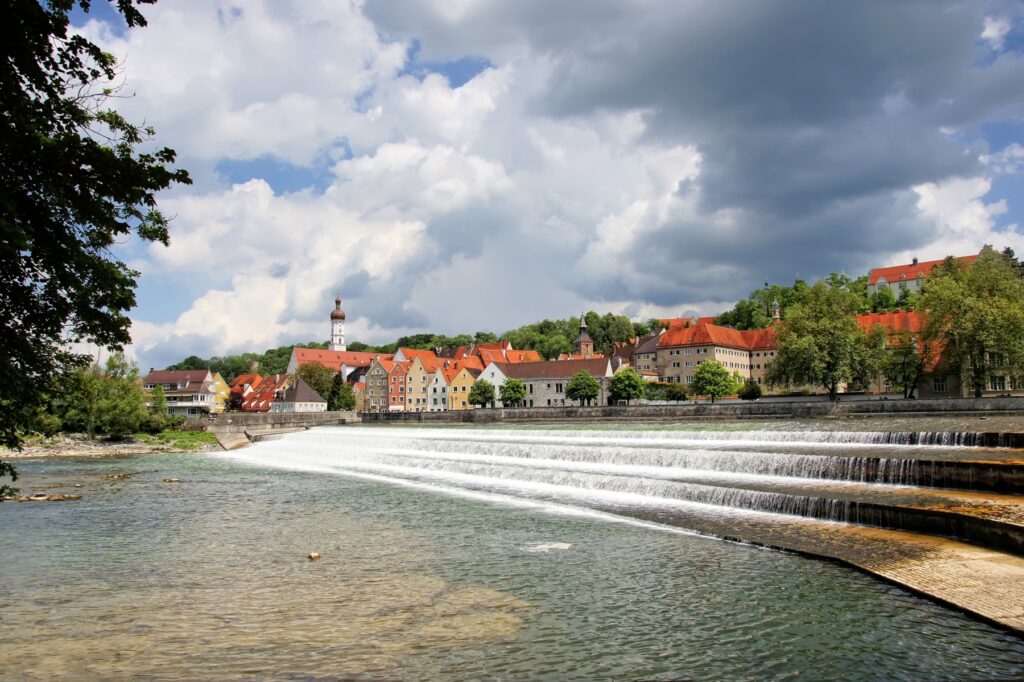
In Landsberg am Lech, the Landsberger Inselbad attracts visitors. Following extensive renovations last winter, the historic Inselbad has been shining in new splendor since June 2026. The modernized Inselbad combines time-honored history with innovative technology. New stainless-steel cladding not only gives it a contemporary look but also contributes to the facility’s longevity. At the same time, the historic wave pool from 1972 remains a familiar feature. In addition, modern pool water technology, efficient heat recovery, and new systems for draining, filtering, and treating the water ensure state-of-the-art operation. As a result, the Inselbad is well-positioned for the future and offers swimmers a sustainable, high-quality recreational experience.
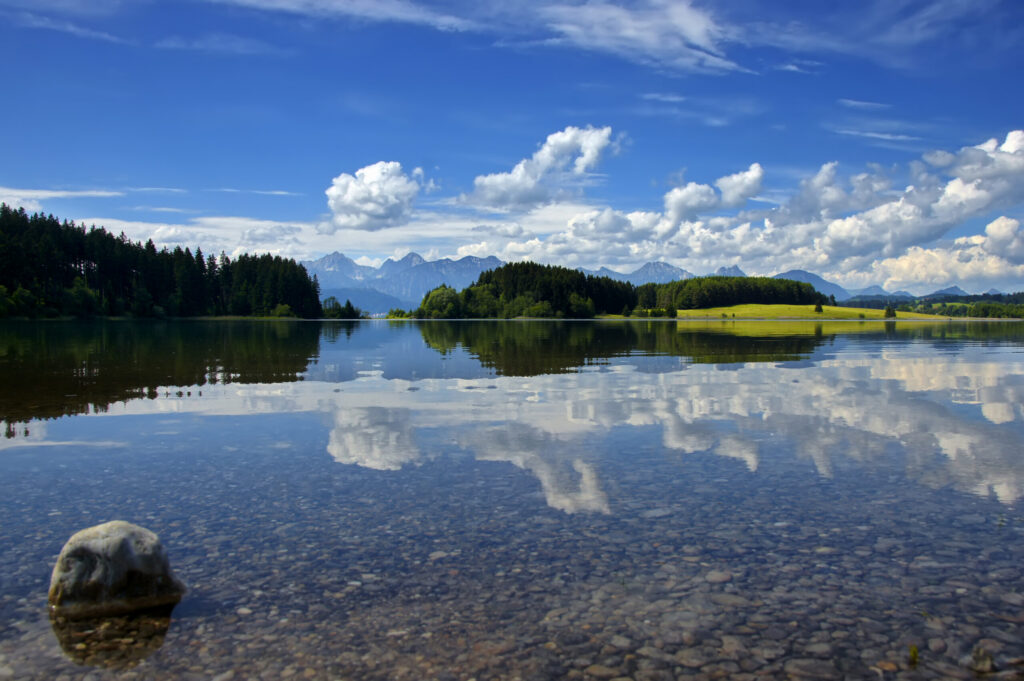
Und als kühlende Erfrischung bei heißer Witterung dienen neben vielen weiteren Naturfreibädern an der Romantischen Straße vor allem auch die Allgäuer Alp-Seen rund um Füssen. Ob Forggen-, Hopfen- oder Weissensee, ihre klaren Wasser wirken kühlend und erfrischend. Der Hopfensee liegt in einem durch den Lechgletscher in der letzten Eiszeit geformten Becken. Er ist 194 Hektar groß, bis zu 12 Meter tief und gehört zu den wärmsten bayerischen Voralpenseen. Am westlichen Ende der Uferpromenade liegt mit dem Seepark Hopfensee eine öffentliche Badestelle mit großer Liegewiese mit Baumbestand und Gastronomie.
Eduard Mörike, the great poet of German Romanticism, wrote in his poem “At Midnight”: “Yet the springs always keep their word; the waters continue to sing even in their sleep.” Along the Romantic Road, refreshing and healing waters flow not only day and night, but throughout the entire year.


