


In place of the two castle ruins, Vorderhohenschwangau and Hinterhohenschwangau, King Ludwig II had Neuschwanstein Castle built between 1869 and 1886 in the style of an old German knight’s castle, on a “spot that is one of the most beautiful to be found” (as Ludwig II wrote to Richard Wagner). Neuschwanstein Castle has since become one of the most famous buildings in the world and one of the many highlights along the Romantic Road. King Ludwig II died on June 13, 1886, before construction was completed. Shortly after his mysterious death, Neuschwanstein Castle was opened to visitors daily and has been attracting enthusiastic visitors from all over the world ever since.
Translated with DeepL.com (free version)


Highlights along the Romantic Road

St Kilian’s Chapel
The late Gothic St Kilian’s Chapel is considered to be one of the finest Gothic double chapels in Germany. Construction…

St. Ulrich and St. Afra
St. Ulrich and St. Afra: originally an Abbey church (1474); late Gothic basilica (15th / 16th centuries) with onion tower…

Original town wall of Nördlingen
Originally preserved city wall/walkway with 5 gates, 11 towers and 1 bastion, which can be walked around for 2.6 km
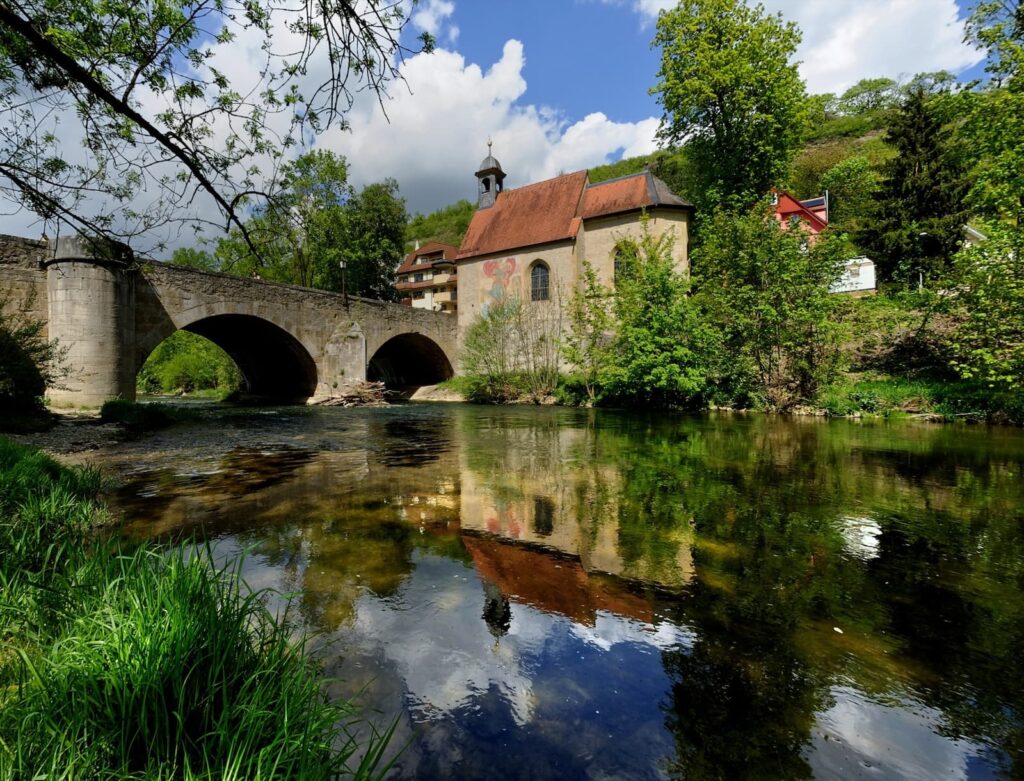
Gothic St. Wolfgang’s Bridge
Gothic St. Wolfgang’s bridge with statue of St. Nepomuk, and St. Wolfgang’s Church, Copyright Holger Schmitt

Town Hall and Golden Hall
Town Hall (1615-20): one of the most attractive secular Renaissance buildings north of the Alps, built by Elias Holl; magnificent…

Käppele Würzburg
Käppele: Gnadenkapelle (Chapel of Mercy; 1653) on the Nikolausberg hill with domed central building and double tower façade by Balthasar…